
Luxury wedding photography is not simply an expensive hire, it is an artistic standard, and knowing the difference will change how you approach your search entirely. Not every expensive wedding photographer is a luxury one, and not every luxury photographer carries the highest price tag in the room. That tension sits at the heart of what makes finding the right photographer genuinely difficult: the word “luxury” has been stretched so far across the wedding industry that it has almost lost its meaning. Photographers who deliver polished, serviceable work charge luxury prices. Photographers with true artistic vision sometimes charge the same. What separates them, in terms of inclusions, creative depth, hand-editing time, and the quality of the final album, is considerable.
Real luxury wedding photography is defined by intentional creative vision: a trained eye for cinematic light, compositional thinking rooted in the visual arts, and a body of work that holds up as heirloom art rather than event documentation. This guide is designed to help you find that standard. By the end, you will know how to read a portfolio with confidence, what a well-structured package looks like in 2026, and exactly what questions to ask before you sign anything.
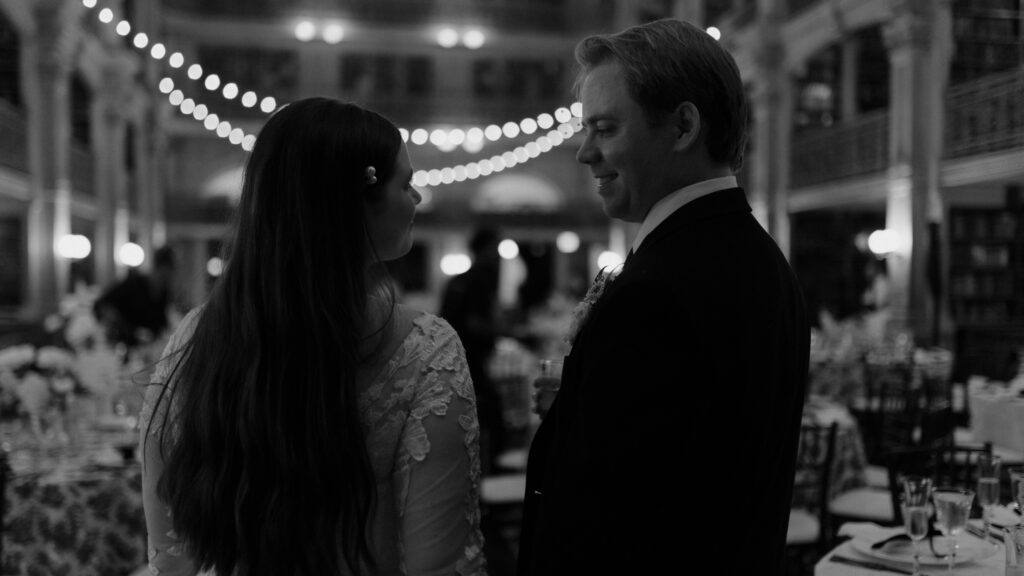
What true luxury means in wedding photography (and what it doesn’t)
Luxury is not a follower count, a long list of package inclusions, or a studio located in a fashionable postcode. It is the ability to make a composed, emotionally resonant frame rather than simply document events in a workmanlike fashion. There is a meaningful gap between a technically skilled photographer and one with a clear creative vision and editorial voice, and couples deserve to understand that gap before they book. The signals of genuine luxury, cohesion, narrative, and range, are visible in the work itself, not in the marketing copy surrounding it.
The difference between premium pricing and fine art quality
Many photographers charge premium rates while delivering polished but formulaic work. The images look clean, the exposure is correct, and the editing is consistent within a recognisable trend. What they lack is an original visual language: a way of seeing a scene that is specific to the person behind the camera. Editorial consistency means that every image in a portfolio feels as though it was made by the same creative mind, not assembled from different stylistic experiments. When that consistency is absent, the work tends to look like a well-executed version of whatever was popular on social media that year.
Fine art quality is visible in the structure of individual frames: the relationship between subject and background, the quality and direction of light, the use of space around the couple. A technically proficient photographer will get a well-exposed image in a difficult venue. A fine art photographer will find the one angle in that venue where the light and architecture work together to make the image feel inevitable.
Why artistic training changes the result
A background in art history, film, or fine art fundamentally alters how a photographer approaches a scene. Painters, directors, and editorial photographers treat light as a compositional element rather than a technical problem. They understand how shadow creates depth, how directional light sculpts a face, and how the relationship between subject and negative space guides the viewer’s eye. A technically trained photographer solves exposure; an artistically trained one shapes feeling. It is the difference between a photograph that records a moment and one that interprets it.
This is the foundation of Aly Robinson Photography’s approach. Aly’s study of art history and the Italian Masters, as reflected throughout her portfolio and creative philosophy, directly informs how she reads a location, places her subjects within it, and works with available light. The result is imagery with a depth and intentionality that separates it from formulaic wedding photography.
What cinematic light and intentional composition look like in luxury wedding photography
The words “cinematic” and “fine art” appear very commonly in wedding photographer bios. That makes it genuinely difficult for couples to distinguish the real thing from a marketing claim. The test is always in the work itself, and knowing what to look for makes the difference between being dazzled by a pretty gallery and actually evaluating what you see.
Reading light like a director, not a technician
Cinematic lighting is directional, contrasty, and motivated. It feels like a film frame because it is built the same way: shadow placement is controlled, the subject separates clearly from the background, and the highlight-to-shadow ratio creates mood rather than flattening it. A cinematically trained photographer does not arrive at a venue and simply react to whatever light is available. They anticipate where the light will be, at what time of day, and in what quality, then position their subjects within it rather than around it.
In practical terms, this means seeking window light that falls at an angle across the face, placing couples at the edge of open shade where the light wraps softly, or using the last twenty minutes of golden hour when rim lighting creates natural separation. The softness of diffused window light, the drama of a backlit silhouette, the warmth of a golden-hour rim, none of these are happy accidents. They are the result of a photographer who reads light the way a director of photography reads a set.
Compositional depth and how a trained frame differs from a well-exposed shot
A technically well-exposed shot can still feel flat. That flatness is almost always a compositional problem: the subject is centred, the background is unresolved, and nothing in the frame creates visual depth or guides the eye. Intentional composition uses foreground and background layers, negative space, leading lines, and the natural framing devices of architecture and landscape. The couple is placed within the scene rather than in front of it.
Aly Robinson’s Italian Masters influence is most visible in this dimension of her work. Painters of that tradition built their compositions so that every element served the emotional reading of the image. Applied to wedding photography, that means treating a doorway, an archway, or a hillside horizon as a compositional structure rather than a backdrop. The resulting images feel considered in a way that technically competent but compositionally flat photographs simply do not.
How to assess a luxury wedding photography portfolio for genuine fine art quality
When you are shortlisting photographers, you need a framework for evaluating a portfolio beyond simply liking what you see. Aesthetic preference is a valid starting point, but it is not sufficient. Three specific signals will tell you whether a body of work represents genuine fine art quality.
What to look for when you browse a photographer’s work
The most telling signal is cohesion. Does the portfolio feel as though it was made by one creative mind, or does the editing style shift dramatically between shoots? A consistent visual language, in terms of tone, colour palette, and compositional approach, indicates that the photographer has a genuine point of view rather than adapting to trends.
The second signal is narrative. Do the images tell a complete emotional story across a wedding day, or are they a collection of impressive individual frames? Luxury photography captures the quiet moments between the set pieces, not just the obvious highlights.
The third signal is range. Does the photographer handle different light conditions, venue types, and unposed moments with equal confidence? Consistency across varied and unpredictable circumstances is one of the clearest marks of a high-end wedding photographer.
The signals that separate editorial quality from stylised editing
Some photographers achieve the appearance of luxury through heavy post-processing rather than in-camera craft. Over-processed work has recognisable characteristics: flat or orange-shifted skin tones, inconsistent shadow rendering, and a colour grade that draws attention to itself rather than serving the image. Genuine fine art wedding photography holds up at any scale. Print it large on a wall and the composition, light quality, and tonal relationships remain. Images that rely on a filter applied in post-production tend to lose their appeal at that scale. If a portfolio looks impressive on a phone screen but you cannot imagine it printed at 60 centimetres wide, that is worth noting.
Luxury wedding photography packages: what’s included and what to expect to pay in 2026
In the UK, the luxury wedding photography market in 2026 typically sits in the £3,000 to £5,000-plus range, with a minority of the most established fine art and destination specialists commanding £7,000 or more. Understanding what each price band typically delivers helps you evaluate value rather than simply comparing day rates.
Core inclusions across the UK luxury tier
At the £3,000 to £5,000 bracket, you should expect full-day coverage of ten hours or more, a second shooter, a professionally edited digital gallery, and a fine art or heirloom album. Many photographers at this level also include an engagement session, which serves both as a deliverable and as a practical opportunity to work together before the wedding day.
At the £5,000 to £7,000-plus level, expect multi-day or destination coverage, travel and accommodation inclusion, and bespoke wedding album deliverables such as parent albums and large-format wall art prints. A well-structured luxury package is transparent about what is included and does not require significant negotiation to establish basic expectations.
Add-ons worth asking about: cinematography, prints, and travel
Wedding cinematography is either bundled or available as a premium add-on, and couples who invest in luxury photography should give serious consideration to matching-quality videography. A cinematic highlight film, produced with the same intentionality as the still photography, creates a different kind of heirloom: one that carries sound, movement, and the voices of the people you love. Drone footage, same-day sneak peek galleries, and destination travel logistics are also common premium additions. For couples planning a Scottish Highland elopement or an international destination wedding, clarifying travel terms upfront, including whether accommodation and flights are included or quoted separately, avoids surprises later.
Turnaround times for luxury wedding photography and the post-production standards to expect
Many couples do not know what a reasonable delivery timeline looks like for genuinely luxury work, and that uncertainty leaves them vulnerable to both unrealistic promises and unnecessary delays. Understanding the standard helps you hold a photographer to it from the outset.
What curated delivery means and why it takes time
Luxury photographers deliver a carefully selected and hand-edited gallery, not every frame captured. Sneak peeks typically arrive within 48 hours to two weeks. Full edited galleries take six to twelve weeks, with peak-season weddings sitting at the longer end of that range. Albums follow eight to twelve weeks after gallery approval, allowing time for design proofing and revisions.
A longer timeline for the full gallery is a quality signal, not a service failure. It reflects the time required to cull, colour-grade individually, and retouch a curated collection rather than batch-processing thousands of frames. This is a consistent characteristic of higher-touch, editorial-style studios.
Editing consistency and what post-production standards to ask about
The right questions reveal whether a photographer’s post-production matches their portfolio. Ask whether images are edited individually by hand or processed in batches. Ask whether the editing style is consistent across the entire gallery, not just the hero shots. Ask what retouching is included as standard. Luxury post-production maintains a coherent, film-like colour palette and consistent skin tone rendering throughout. It is not a preset applied uniformly to every image. These standards should be written into the contract, not left to assumption.
Contract terms and questions to ask before you sign
Entering a booking conversation from an informed position changes the dynamic entirely. You are not asking for reassurance; you are confirming that a photographer operates at the standard their portfolio suggests.
The contract clauses that protect you
A well-drafted contract is itself a signal of professionalism. The core clauses to look for are: usage rights (you receive a personal-use licence; the photographer retains copyright), the non-refundable retainer (typically 20 to 30 per cent, sometimes up to 50 per cent), the final balance due date, cancellation and rescheduling terms, force majeure provisions, and the delivery guarantee specifying the number of images, file resolution, and turnaround window. If any of these terms are vague or absent, ask for them in writing before you sign. A photographer who is reluctant to commit to delivery terms in a contract is a red flag, regardless of how impressive the portfolio is.
The questions that reveal a photographer’s true level
Beyond logistics, the most revealing questions are creative ones. Ask the photographer to describe their compositional or creative philosophy. Ask how they approach light at an unfamiliar venue. Ask whether they carry backup equipment and have a contingency plan if they are unable to attend on the day. Ask what their editing process looks like and how they maintain consistency across a full gallery of several hundred images. These questions are not confrontational; they are an invitation for a confident, artistically serious photographer to show you exactly how they think. The answers will tell you more than the pricing page ever could.
Choosing from an informed position
Luxury wedding photography is a creative discipline, not a price point. The couples who end up with imagery that functions as heirloom art are the ones who understood that distinction before they booked. They looked at portfolios for cohesion, narrative, and range rather than just aesthetic appeal. They asked the right questions about light, composition, post-production, and contract terms. They evaluated value rather than simply comparing day rates.
As you shortlist, three things matter most. Artistic vision, a trained and consistent eye for light and composition, is the foundation. Portfolio integrity, meaning cohesion, emotional narrative, and genuine fine art quality that holds up at scale, is the proof. And professional structure, a clear contract, fair and transparent pricing, and realistic delivery timelines, is what ensures the experience matches the imagery. A photographer who scores well across all three is almost certainly worth the investment.
When you are ready to find a luxury wedding photographer whose work you would genuinely be proud to hang on a wall, start by looking at the quality of the light and the structure of the frames. If you would like to explore what a fine art and cinematic approach to your wedding day looks like in practice, get in touch with Aly Robinson Photography to discuss your vision.
